12:07 AM
IntroductionSoil may be in abundance around the world, however, poor land use practices often damage the quality of soil. Bad quality soil also results in the speeding up of soil erosion. In this report, we will be focusing on what has been done to improve soil conditions and what had been done to prevent detoriation of the soil structure in SIngapore. We will also be looking at ways which we thought might improve these methods. In addition, we will be finding new ways so help prevent soil erosion.
;
the end
12:09 AM
Aims of our project-Find out which kind of soil is most prone to soil erosion
-Find out what methods are being implemented to prevent soil erosion
-Find out further ways to improve existing methods
-Find out how soil erosion has affected our neighbourhoods
-Find out the importance of soil
-Find out the application of soil in real life
;
the end
12:21 AM
Objectives- To recognize the problem and effects of soil erosion around our neighbourhood
-To practice and apply practical, geographical skills (e.g. Map reading at the Bukit Timah Hill Nature Reserve)

-To improve the situation of soil erosion in Singapore
- Raise awareness of soil erosion to secondary school students (Reason behind the creation of THIS website! <3)
;
the end
12:26 AM
Soil erosion in our neighborhood
To show you a copy of what we did, we will only be showing valerie's part of the report on the northern part of Singapore.
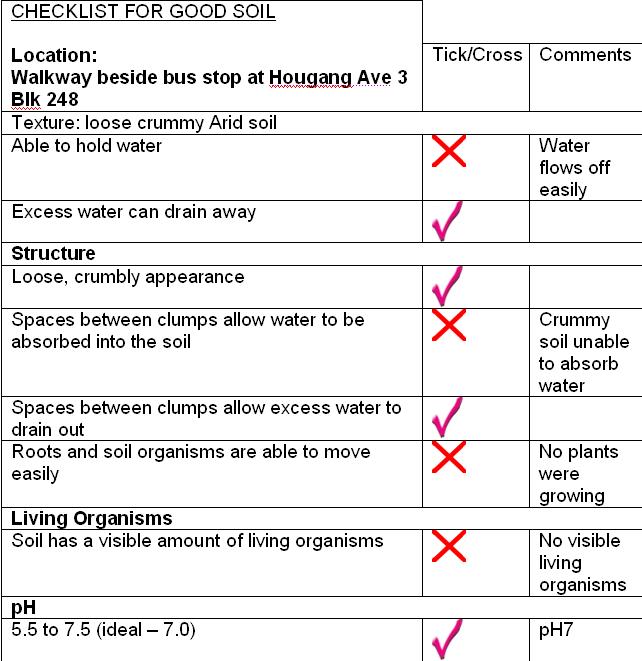
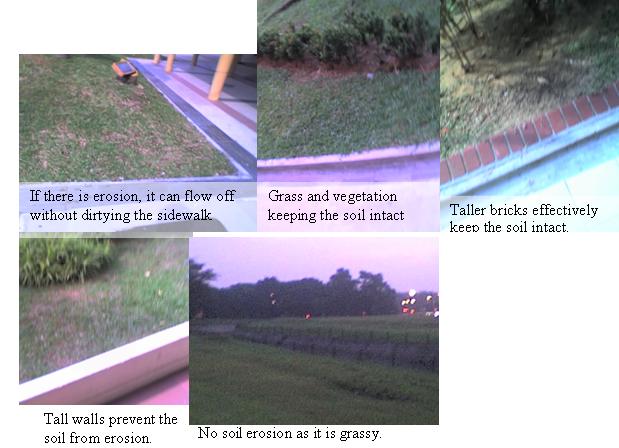
-North: Valerie (Hougang)CHECKLIST FOR SOIL

- Photographs of soil samples

- List for preventive measures taken against soil erosion

- Analysis and data presentation

- Suggestions for new ways to prevent soil erosion
After many years, the healthy soil has degraded into arid soil that cannot support plant growth and animal activity.
One suggestion is that new soil should be introduced and then hardier grasses and plants should be planted to prevent them from being uprooted when human traffic increases. The people in charged of my neighbourhood should also think of replanting some grasses at areas where soil erosion is a problem.
But thankfully, the human activity is not detrimental to the pH of the soil, which means that the new soil introduced will not degrade to an unhealthy pH level.
;
the end
12:28 AM
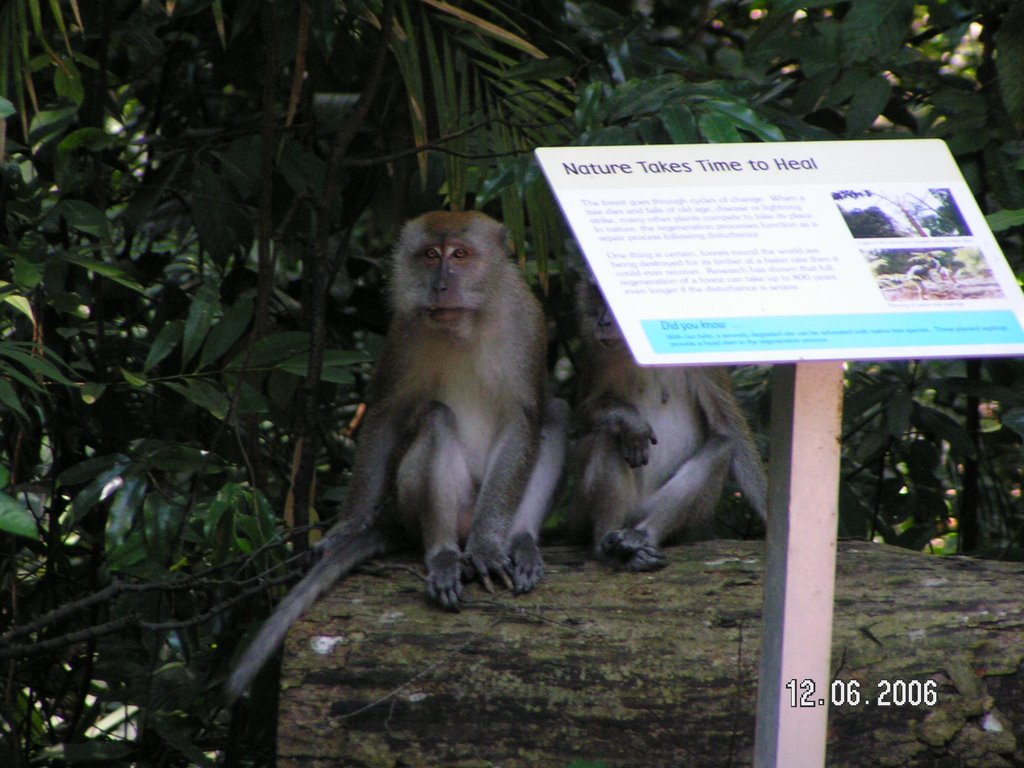
Bukit timah hill (central)Processes (data collection/ research methods)We went to Bukit Timah Hill on 12th of June for our fieldtrip.
We used our Geography knowledge to find out where the primary rainforest was by looking out for the main characteristics of a primary rainforest like a tall canopy, bigger barks (refer to picture).
 Monkeys as natural factors
We collected information like what was done to prevent soil erosion, the quality of soil, and what are the natural factors (eg: monkeys) that prevent soil erosion from worsening.

As we did not have the permission to collect soil samples for our project, we could not collect soil from NParks territories.
;
the end
12:38 AM
Checklist for quality of soilAt bukit Timah hill, although we could not take soil samples, we managed to fill in some our checklist for quality of soil. therefore we got some ideas on how the soil condition is.

;
the end
12:43 AM
Analysis of information
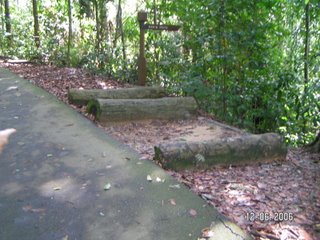
Logs like these are placed along the trail to help minimize soil erosion as they stabilize the soil and block the flow of soil down the hill. As you can see from the picture below, they are actually quite big and are very much efficient in the case when rain is pouring down on the soil.

Slopes like these prevent the rapid mudflows from happening by hampering the flow of mud. Whereas in the case of a rainy day, they prevent rainwater from flowing down the slope quickly, thus preventing the loss of precious topsoil. In a way the act like how terracing works.
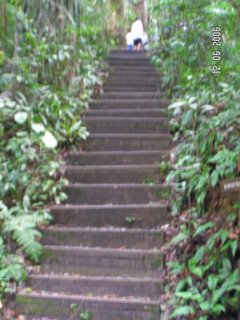
These stairs are found throughout the red trail. Other than acting as a preventive measure against soil erosion, they enable curious visitors to explore the hill and are also act as a shortcut.
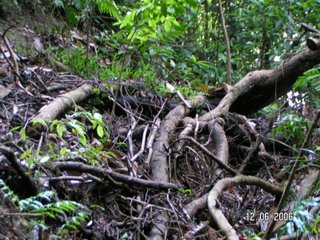
Natural roots, as we all know, are Mother Earth’s natural protection against soil erosion. The logs that we have shown above act exactly like these roots. However, these roots, unlike the logs, have the more of the ability to how down the soil as they are rooted into the soil instead of acting as a weight on the soil.
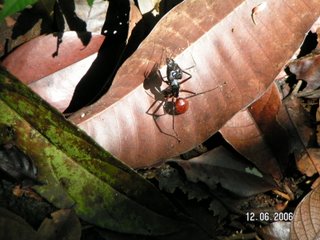
Animals also help in the prevention of soil erosion. By leaving their footsteps behind, they are actually compacting the soil and therefore preventing the topsoil from being eroded.
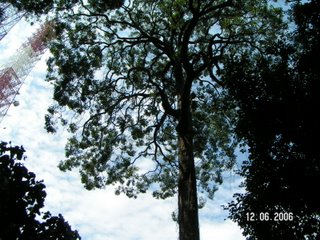
Emergent and canopy. These features of a primary rainforest provide the first protection against rainfall. They minimize the impact that the rain has by intercepting the rainfall first. The leaves with drip tips hold some of the rain before allowing it to flow onto the ground. And the tree itself also absorbs some of these raindrops and allowing them to reach the ground via the roots.
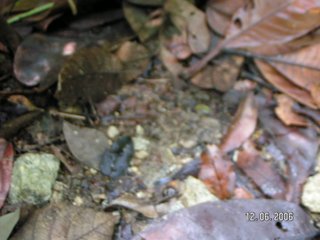
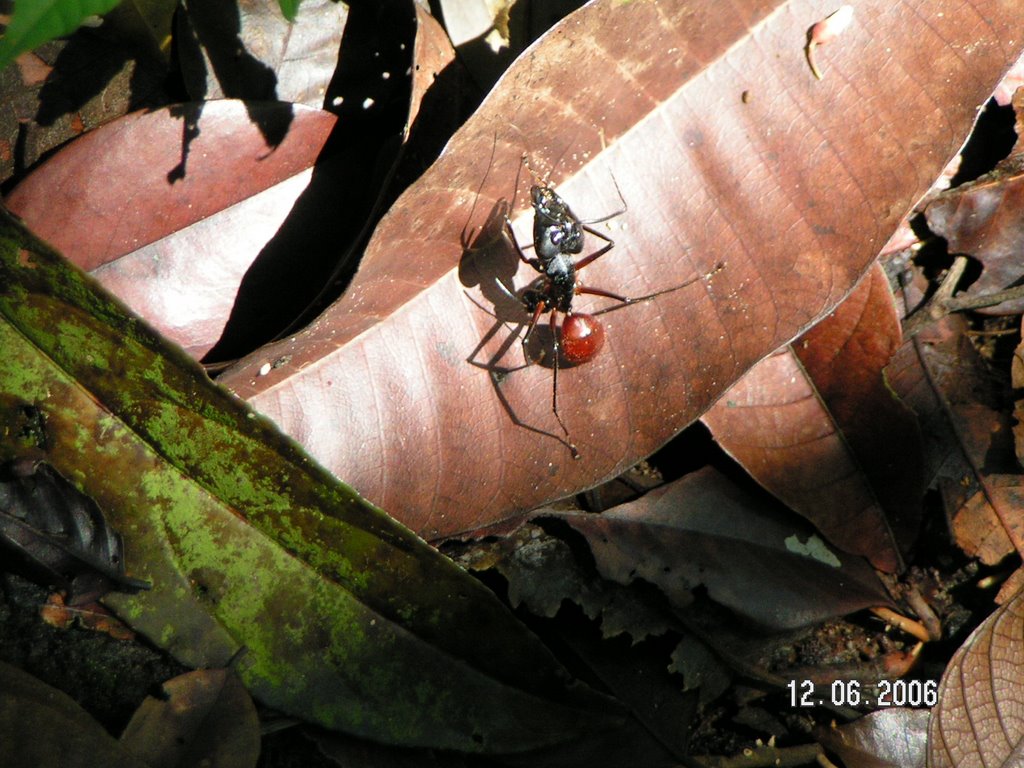
Leaves, in a way, act as protection against soil erosion. They cover the topsoil and prevent the rain from eroding them. this picture also feature one example of loose, crummy soil we saw on the hill. We would be further investigating the soil properties on our next visit here.
;
the end

 HEY!
HEY!